• Home
  • Blogs Home

Archive for the ‘Breast augmentation’ Category

Common Reasons For Undergoing Breast Implant Exchange Surgery

Wednesday, February 10th, 2010

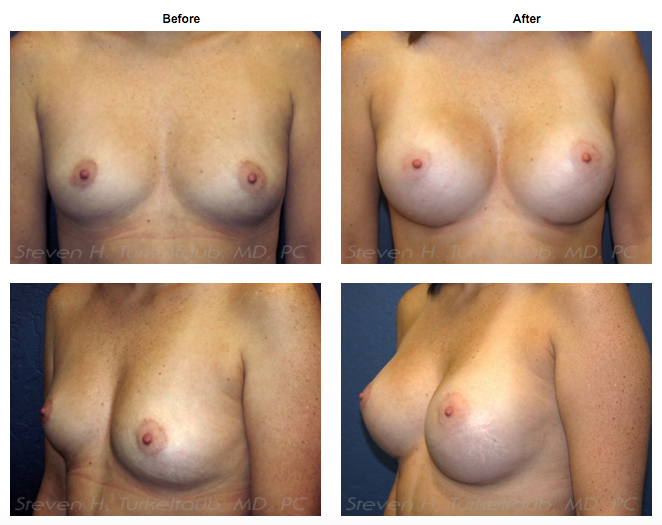
Replacing of a woman’s own implants for newer ones is referred to as breast implant exchange surgery which also is a category of breast revision surgery. The implants could have been originally placed for a breast augmentation, during a breast lift or in breast reconstruction.

There are several reasons why a woman would select this course of action with some of the most common ones being to:

  1. change the size of the implant
  2. alter the shape with regard to projection and width
  3. change from saline to silicone implants or vice versa
  4. replace an implant which has ruptured
  5. change the implants as an incidental part of another breast issue such as drooping or capsular contracture

Usually the number one reason for a breast implant exchange is to obtain larger implants in order to have breasts that are significantly larger. Very uncommonly does a patient request going to a smaller size. In most of these situations, it is either because they were made excessively large initially by their surgeon or they gained a considerable amount of weight in the intervening period of time resulting in concomitant natural breast enlargement.

It is quite rare for my personal patients to desire different implant sizes and when they do, it is usually years later and often precipitated by another event such as an implant rupture. How is it that my implant exchange rate is very low?  During my patient’s consultation, I listen carefully to their desires and concerns, take measurements, have them “try on” different implants as well as show them photographs of other patients that may be relevant for their situation. Finally, during surgery I will first use temporary “sizers” so as to precisely determine the perfect implant for them.

The relative proportions (profile) of the implant which affect the ultimate breast configuration, are also important. By explaining and offering different profile implants such moderate, high and super-high, my patients can realize the customized appearance they desire. For example, a patient who has a very narrow chest and wants a lot of projection but without excessive width, would benefit from a higher profile implant. A woman who is relatively broad, has a moderate amount of breast tissue and doesn’t want to be extremely large, would be better off with a moderate profile implant.

Finally, most of the patients that I see who have saline implants and are undergoing an exchange for whatever reason, switch to silicone implants. The reason is fairly obvious – they look and feel far more natural. Only in rare circumstances do they go from silicone to saline and it is never for aesthetic reasons.

For more information on breast implants, breast enlargement or any other plastic surgery procedure that I perform or to schedule a complimentary consultation, please contact my office at 480-451-3000.

Steven H. Turkeltaub, M.D. P.C.
Scottsdale and Phoenix, Arizona

Tags: Augmentation, Breast, Implants, saline, silicone implants
Posted in Breast augmentation, Breast implants, saline implants, silicone implants | Comments Off

An Uncommon Outcome From Breast Augmentation: Symmastia (Uniboob)

Tuesday, December 1st, 2009

Though the results from a breast augmentation are generally excellent with a satisfaction rate well over 90 percent, complications and less than desirable results do occur. One of the less common problems that can occur is where the breasts are so close together that they seem to coalesce into one breast unit. This is called symmastia (or synmastia) or in pseudo lay terms, a uniboob.

Symmastia of breasts

Symmastia of breasts

What are the causes of this deformity known as symmastia? Usually this is the result of attempting to move the breasts closer together in order to obtain improved cleavage. The pockets for the implants are dissected too far toward the midline which detaches the skin and underlying tissue from adhering to the sternum. The skin then drapes over the breast implants without having a discrete attachment to the sternum creating this amorphous “uniboob”. The situation is further exacerbated with implants that are inappropriately sized for the woman’s dimensions. Symmastia can occur both with breast implants placed in front of and behind the pectoralis major (chest wall) muscle.

Women who are very thin do have a slightly greater risk of this deformity occurring as do those who have a chest wall deformity known as pectus excavatum (where the sternum has a caved in appearance). Very conservative dissection in these situations and avoiding disproportionately large breast implants can help to minimize the development of symmastia.

There are several approaches which have been employed to address this challenging deformity. A relatively new technique involving the placement of specially processed tissue (Alloderm® and Strattice®) offer the potential of more predictable, satisfactory and permanent results.

For more information on symmastia, breast implants, breast augmentation or any other cosmetic surgery procedure or to schedule a consultation, you can call my office at 480-451-3000.

Steven H. Turkeltaub, M.D. P.C.
Scottsdale and Phoenix, Arizona

Tags: Augmentation, Breast, Breast implants, symmastia, synmastia, uniboob
Posted in Breast augmentation, Breast implants, symmastia | Comments Off

Simple Steps to Lower the Risk of a Hematoma in Breast Augmentation Surgery

Sunday, August 16th, 2009

Hematomas, which are undesirable accumulations of blood, are an inherent risk of most surgical procedures. They are relatively uncommon following a breast augmentation, occurring in about 1 to 4 percent of patients. Simple precautions can be taken to help minimize the incidence.

Medications and other substances that interfere with the ability of blood to clot normally will increase the risk for the development of a hematoma following surgery. Commonly used medications that are known to have this side-effect include aspirin, ibuprofen, Motrin and Aleve. There are also ones specifically used as blood thinning agents to prevent clots such as Coumadin, Warfarin and Plavix. Many herbal supplement as well as Vitamin E and fish oils also have blood thinning effects.

My patients are provided with a thorough list of medicines, supplements and herbs that should be avoided for a specific period of time. Most of these medications, Vitamin E and herbal supplements should not be taken starting two weeks preoperatively and continuing until two weeks postoperatively. Therapeutic blood thinners like Coumadin and Warfarin are typically stopped two to three days before surgery and restarted again around two to three days postoperatively. Clearance from your physician to temporarily discontinue these medications is mandatory.

Vigorous activities that involve considerable exertion, heavy lifting or repetitive upper extremity movements can increase the risk of hematomas. My patients are instructed to avoid sports, aerobics, jogging, and similar activities for around three weeks after surgery. For those women who have a fairly physical or strenuous job such as hairdressers, nurses and waitresses, some restrictions are recommended during this period of time.

A few simple steps taken can keep your risk low for developing a hematoma following a breast enlargement and therefore avoid the undesirable consequences.

If you would like additional information on breast augmentation, breast implants or other cosmetic procedures, you can contact my office at 480-451-3000.

Steven H. Turkeltaub, M.D. P.C.
Scottsdale and Phoenix, Arizona

Tags: Augmentation, Breast, Breast implants, Enlargement, hematoma
Posted in Breast augmentation | Comments Off

What is the Earliest Age That A Breast Augmentation Should be Done?

Sunday, August 2nd, 2009

In our society, there is a strong emphasis on breasts and breast size. From magazines, television, movies and even advertisements, there is a preponderance of voluptuous well-endowed women that are seen as the ideal. Their presence seemingly everywhere can be quite stressful for the adolescent girl experiencing considerable hormonal and emotional fluctuations and physical changes along with a fragile body image.

When an adolescent girl realizes that her breasts are not and will never be the size that she would like them to be, what is the youngest age that it would be reasonable for her to pursue breast augmentation surgery? Taking physical, emotional, and intellectual issues and maturation into consideration, my recommendation is for her to wait until at least 18 years of age before undergoing a breast enlargement.

As with many things, there are some exceptions. If a girl has breasts of such significantly different sizes that is difficult to hide with normal clothing or if there is either severe underdevelopment or absence of one breast (which is often congenital in nature), proceeding with surgery at an earlier age may be more prudent. Surgery in these situations may even be considered to be reconstructive.

If you would like additiona information on breast augmentation, breast implants or other cosmetic procedures, you can contact my office at 480-451-3000.

Steven H. Turkeltaub, M.D. P.C.
Scottsdale and Phoenix, Arizona

Tags: Augmentation, Breast, Breast implants
Posted in Breast augmentation, Breast implants | Comments Off

Do Silicone Breast Implants Lower Your Risk for Developing Breast Cancer?

Sunday, May 24th, 2009

You must be thinking that there has to be a typo here. If anything, from all the news media palaver in the past, it is the opposite that must be true. Actually, this is the right question and it does have an unexpected answer.
Silicone breast implants have been subjected to more scrutiny and studies over the years than any other medical device. Several of these looked at any possible association of the long term presence of silicone breast implants with the development of breast cancer by evaluating large numbers of women over many years. The results were shocking but consistent: there is a statistically lower risk of developing breast cancer in women who have had these implants long term. This finding has been reconfirmed by many studies in diverse locations around the world.

The most recent research published in January 2009 in the International Journal of Cancer revealed the results of a epidemiological study of over 6200 Swedish and Danish women who had a mean duration of implantation of over 16.5 years with thirteen percent having them in excess of twenty five years. The findings identified a statistically significant reduction of risk of developing breast cancer of 27%. Previous studies conducted in the United States have shown decreased risks as high as 37 to 53%.

Why women with silicone breast implants have a lowered risk of developing breast cancer is unclear and has been the subject of much conjecture. However, this is fantastic news both for women who are considering a breast augmentation and those who already have silicone implants. When discussing breast enlargement with my patients, I try to put this all in perspective. I do not tell them that if they elect to have silicone breast implants, their risk for breast cancer may be decreased. Instead, I let them know that at a minimum there is no evidence that having silicone breast implants will increase their chances for developing breast cancer.

Steven H. Turkeltaub, M.D P.C.
Scottsdale and Phoenix, Arizona

Posted in Breast augmentation, Breast cancer, Breast implants, silicone implants | Comments Off

Breast Implants in Breast Augmentation: How Long Do They Last?

Friday, March 13th, 2009

If you have breast implants, don’t you wish that they would last forever? Although this would be wonderful, they are not lifetime devices and will probably need to be replaced sometime in the future. Many of my patients here in the Scottsdale, Glendale and the Phoenix area are under the impression that breast implants need to be replaced every ten years. Fortunately, this is not the case. The silicone gel implants manufactured today are much better than previous generations. There have been many technological and manufacturing improvements including a thicker and more durable outer shell that is virtually impermeable to any silicone migration. T

hey also are filled with a much more cohesive silicone gel. As a consequence, it is possible for many silicone gel breast implants to last 20 to 30 years or more. In an ongoing prospective scientific study overseen by one of the silicone implant manufacturers, Allergan, it was noted that there is a rupture rate of 2.7% at 4 years after breast enlargement surgery.

Saline breast implants deflate, on average, much earlier and at a significantly higher rate as compared to silicone implants. This has been borne out by my personal experience of over twenty years at the Arizona Center for Aesthetic Plastic Surgery. Textured saline implants do not fare nearly as well as the smooth surfaced ones.

There are many other factors that can influence the lifespan of the implants aside from whether they are silicone or saline. Some of these include the presence or absence of surface texturing, size of the implant, manufacturer of the implant, size and location of the incision for insertion, surgical technique, mammograms and trauma. Each one of these issues can be discussed in more detail during your consultation.

Breast enlargement is extremely rewarding for the vast majority of women who have had the procedure. Just realize that although the breast implants are generally quite durable, they typically will not last forever.
For much more information or to schedule a thorough consultation for a breast augmentation, breast lift with implants or other cosmetic procedures, you can contact Dr. Turkeltaub at 480-451-3000.

Smooth(left) and a textured(right) silicone implants

Smooth(left) and textured(right) silicone implants

Tags: Breast augmentation, Breast implants, silicone implants
Posted in Breast augmentation, Breast implants, silicone implants | Comments Off

The Importance of Breast Implant Size for Breast Augmentation

Thursday, February 19th, 2009

The number one issue facing women when electing to undergo a breast augmentation is selecting the proper sized breast implant. This is a truly a much more complex problem than one would think. You know that you want to be larger but how large? Do you want to be a “C”? A “small D”? A “full C”? Do you want to be proportionate, a little larger than proportionate or very large?

Unfortunately, these are all very subjective, personal and not standardized. What may be proportionate for one person would be way too small for another. A large “C” for one woman may be another’s “D”. Overly large breasts to one woman may be considered balanced to another. Further compounding the confusion is that there is no standardization of cup sizes among bra manufacturers. One company’s “C” bra may be identical in fit with another company’s “D” sized bra.

In my experience, I have found some useful approaches to assist my patients in better determining the size that they are seeking. Trying on a variety of implants in the office can provide some facsimile of a three dimensional result although the true shape and size will be different. Judging their responses to various elements then allows me to better ascertain what they desire. They are also shown photographs of a diversity of patients with varying cup sizes. Many patients bring in pictures of breast shapes and sizes that they like from the internet or magazines which can further help. However, there are limitations due to clothing, air-brushing, perspective and the two dimensionality of the pictures.

Combining all this information and input along with some intuition, I can determine reasonably well what my patient is looking for. During surgery, all this information assists me in making the final decision on the most desirable implant size. If there is any question about the size, I will elect to go larger rather than smaller. This approach is usually makes everyone happy.

These are a few different sizes of silicone implants

These a a few different sizes of Silicone implants

Tags: Augmentation, Breast, Enhancement, Enlargement, Implants, Size
Posted in Breast augmentation | Comments Off

  • You are currently browsing the archives for the Breast augmentation category.

  • Site Navigation

    • About Dr. Turkeltaub
    • Our Practice
    • Breast Augmentation
    • Breast Lift
    • Breast Revision Surgery
    • Breast Reduction
    • Male Breast Reduction
    • Breast Reconstruction
    • Maps & Directions
    • Financing
    • Contact Us

  • Recent Posts

    • Discomfort Following Male Breast Reduction Surgery For Gynecomastia Is Often Fairly Mild
    • Common Reasons For Undergoing Breast Implant Exchange Surgery
    • Dr. Steven Turkeltaub Has Been Selected As One Of America’s Top Plastic Surgeons for 2009
    • The Effects of Previous Unilateral Breast Radiation Treatments On Bilateral Breast Reconstruction Using Tissue Expanders
    • An Uncommon Outcome From Breast Augmentation: Symmastia (Uniboob)
    • A Small Percentage of Breast Reduction Specimens Contain Cancer Not Detected By Mammogram
    • Gynecomastia Treatment Scottsdale
    • Tissue Expansion for Breast Reconstruction Can Be Challenging In Women With Previous Radiation Therapy
    • Simple Steps to Lower the Risk of a Hematoma in Breast Augmentation Surgery
    • Breast Reductions Can Be Performed for Cosmetic Reasons
  • Categories

    • Breast augmentation (7)
      • symmastia (1)
    • Breast cancer (4)
      • radiation treatments (1)
    • Breast implants (5)
      • saline implants (1)
      • silicone implants (3)
    • Breast reconstruction (3)
      • Tissue expanders (2)
    • Breast reduction (4)
    • Insurance (1)
    • liposuction (1)
    • Male breast reduction (treatment of gynecomastia) (3)
    • Mastopexy (1)
    • News / Press (1)

www.arizonabreast.com/blog
Copyright © 2009 Steven H. Turkeltaub M.D.
10290 N. 92nd Street #304 Scottsdale AZ, 85258